

Clear Earrings
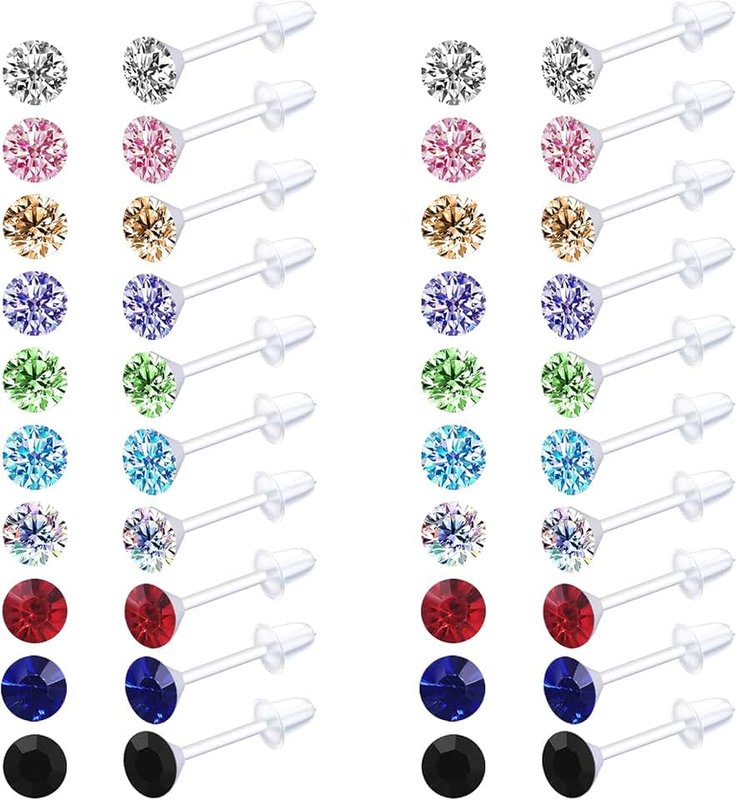
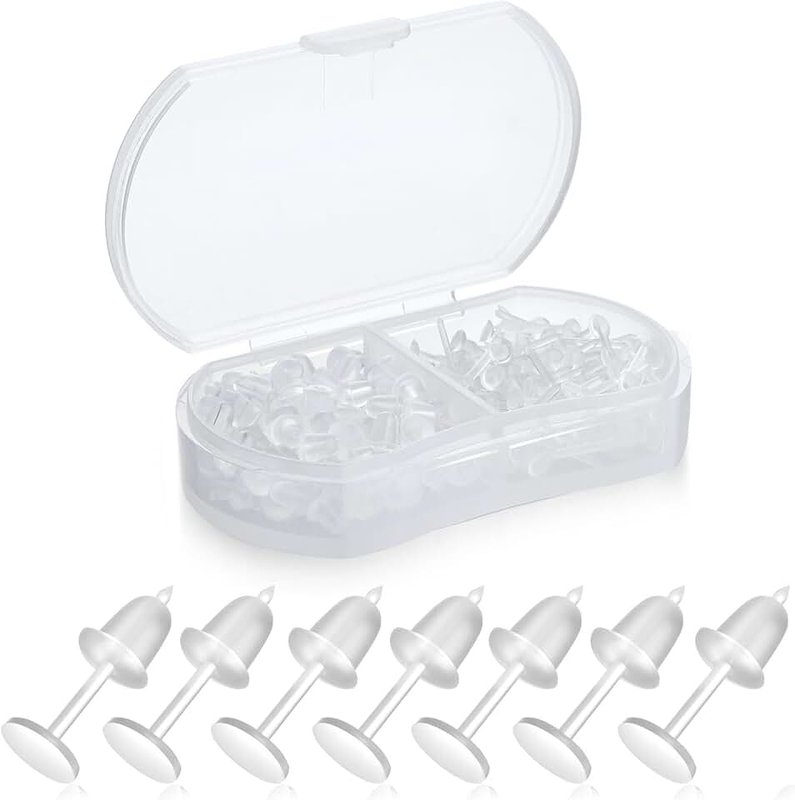
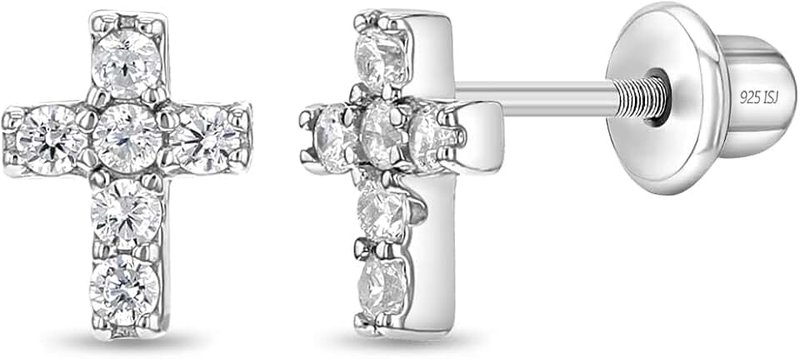
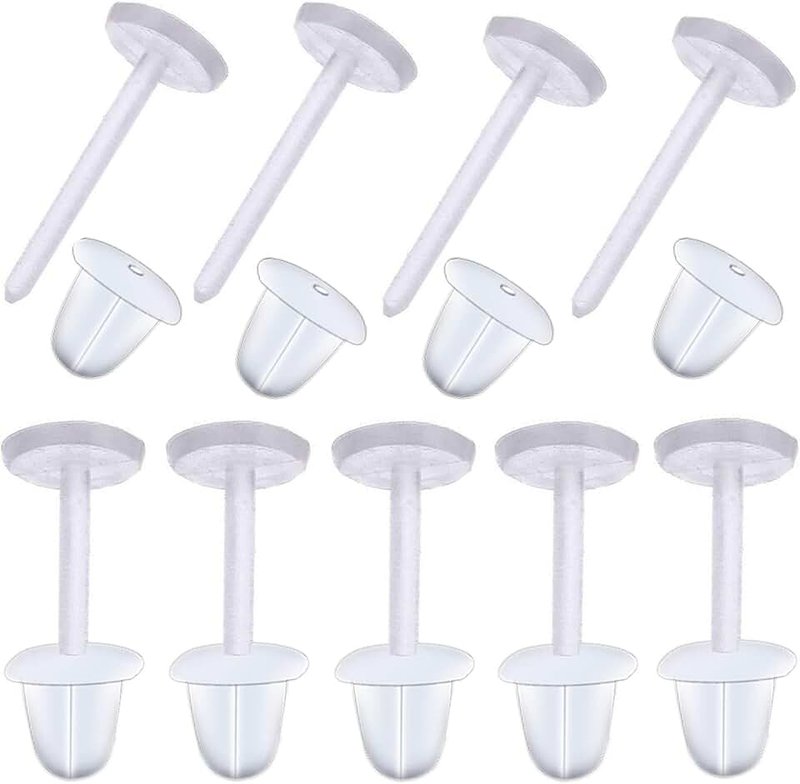
As an Amazon Associate, DreamPigeon earns from qualifying purchases. Prices and availability are accurate as of the date/time indicated and are subject to change.
A Practical Guide to Buying Clear Earrings
Clear earrings serve a unique purpose in the jewellery world — they keep piercings open without drawing attention. Athletes, students with dress codes, professionals in conservative workplaces, and anyone healing a fresh piercing all reach for clear earrings at some point. But the material matters far more than most people realise, especially if the earring sits in a still-healing piercing.
Material Options
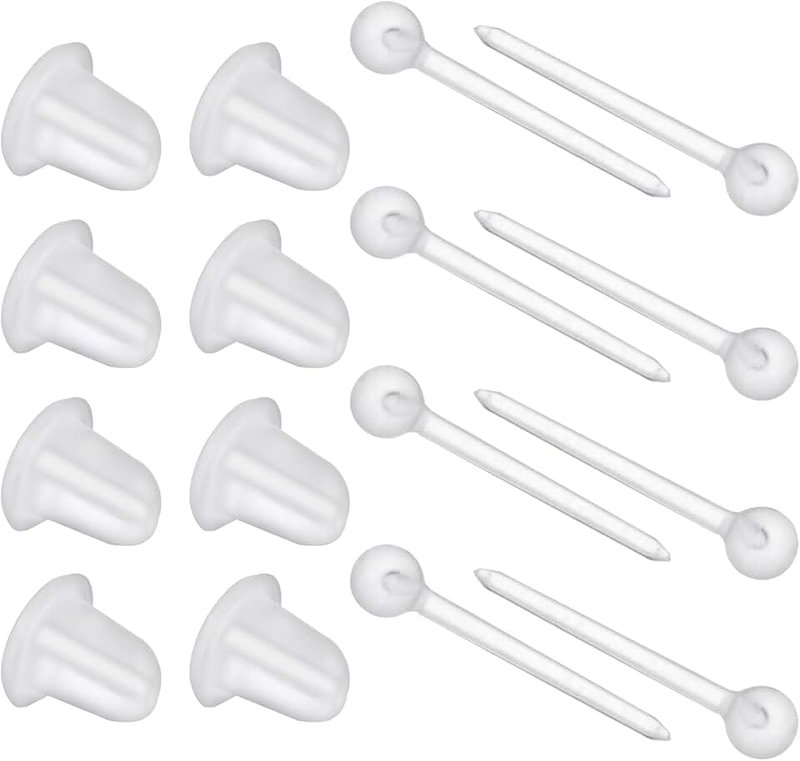
Bioplast (medical-grade bioplastic) is the gold standard for clear earrings. It is autoclavable, flexible, and biocompatible — meaning it will not trigger allergic reactions. It bends slightly with movement, reducing pressure on the piercing. Acrylic is cheaper but not suitable for unhealed piercings because it harbours bacteria in microscopic surface pores. Glass retainers are another option: borosilicate glass is non-porous and body-safe, and its smooth surface minimises irritation.
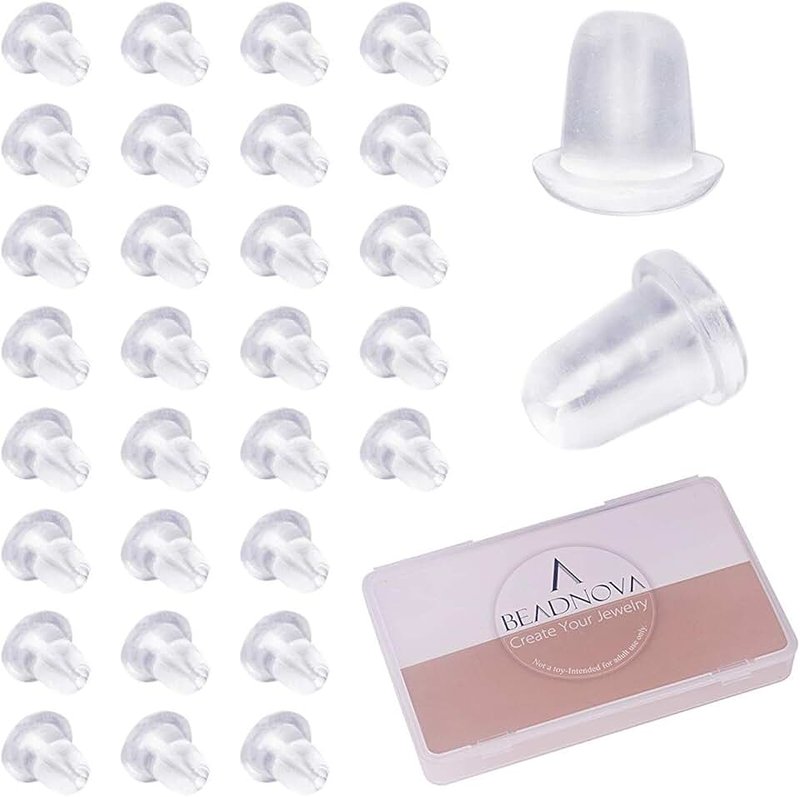
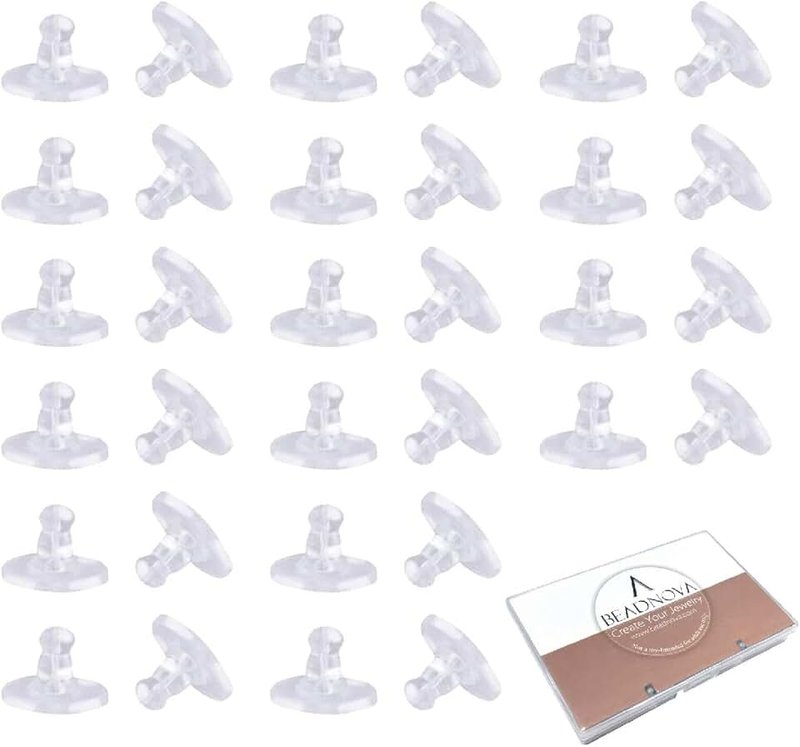
Silicone clear earrings work for healed piercings and are very comfortable. Avoid them in fresh or irritated piercings — silicone is not implant-grade. For anyone with metal sensitivities, clear earrings made from PTFE (a medical-grade plastic) are hypoallergenic and almost invisible.
Styles Available
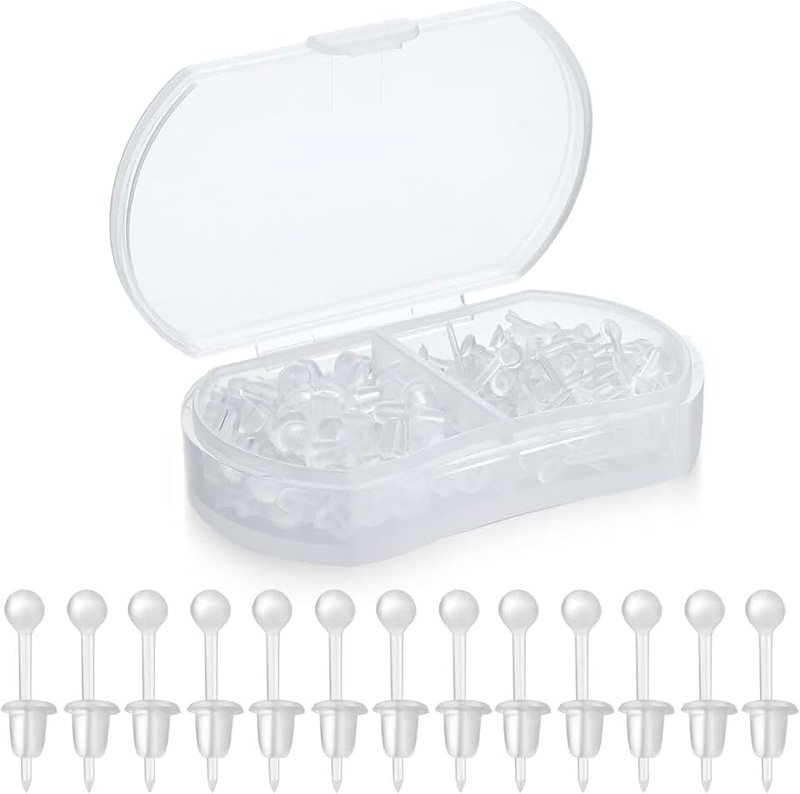
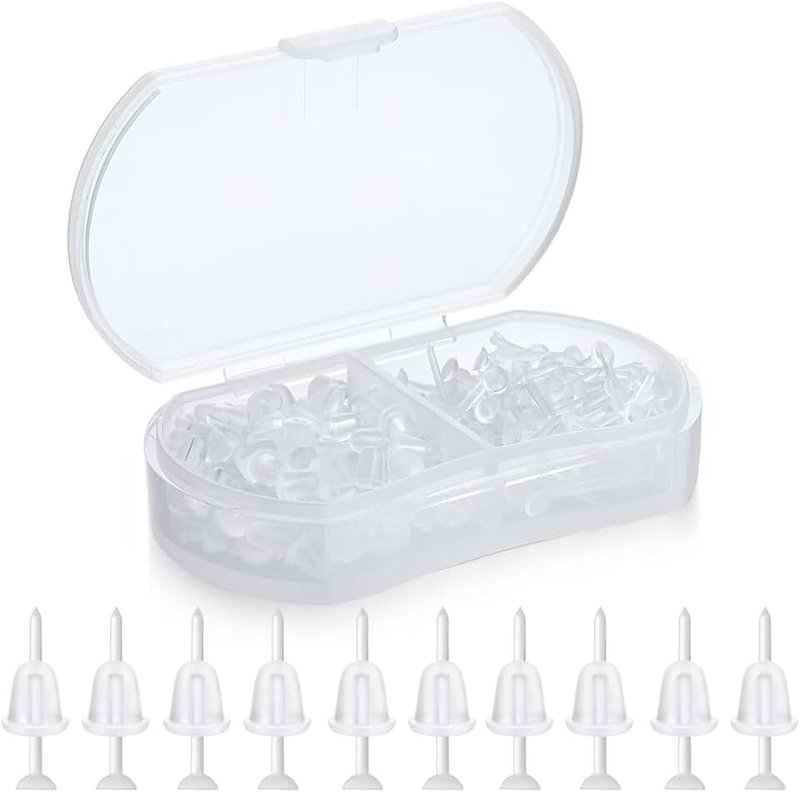
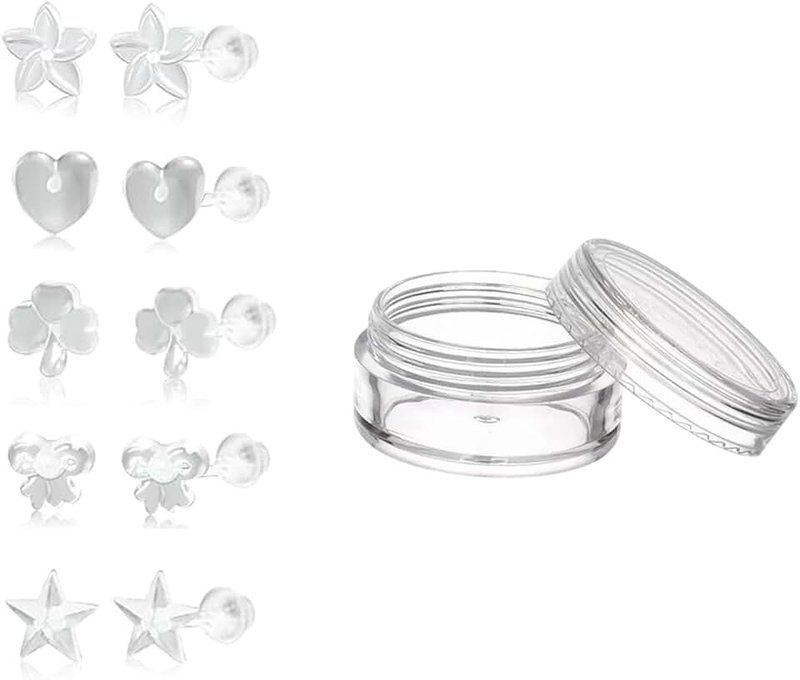
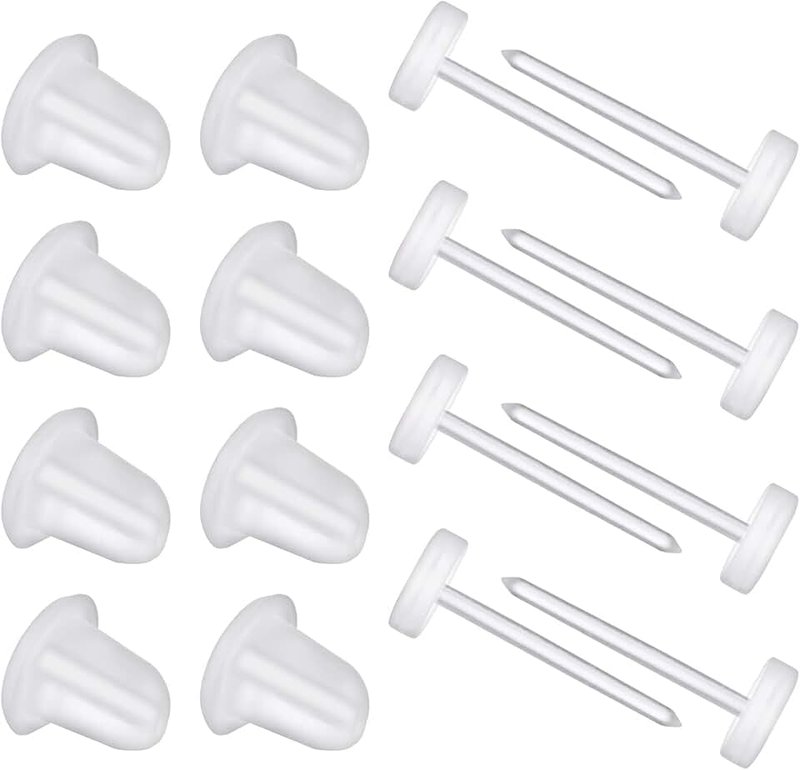
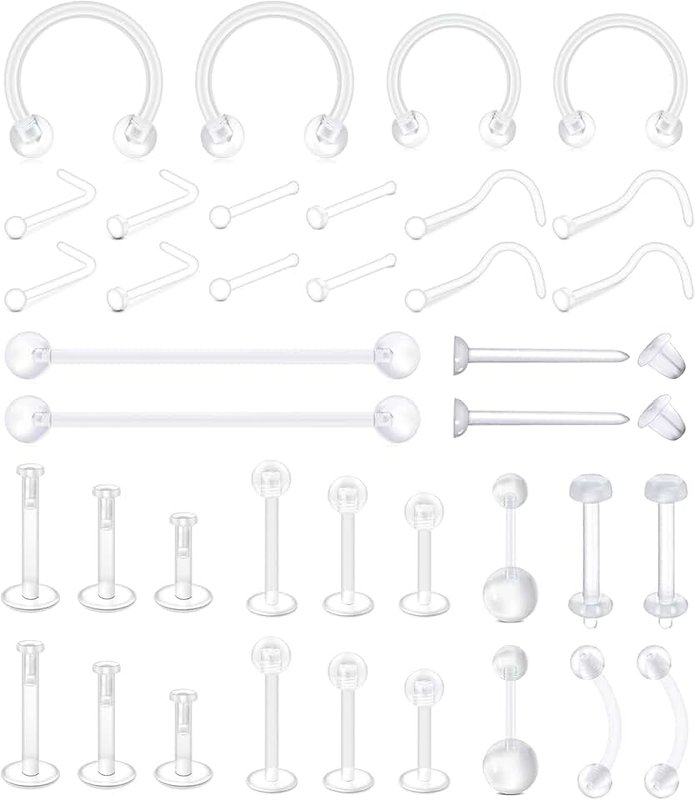
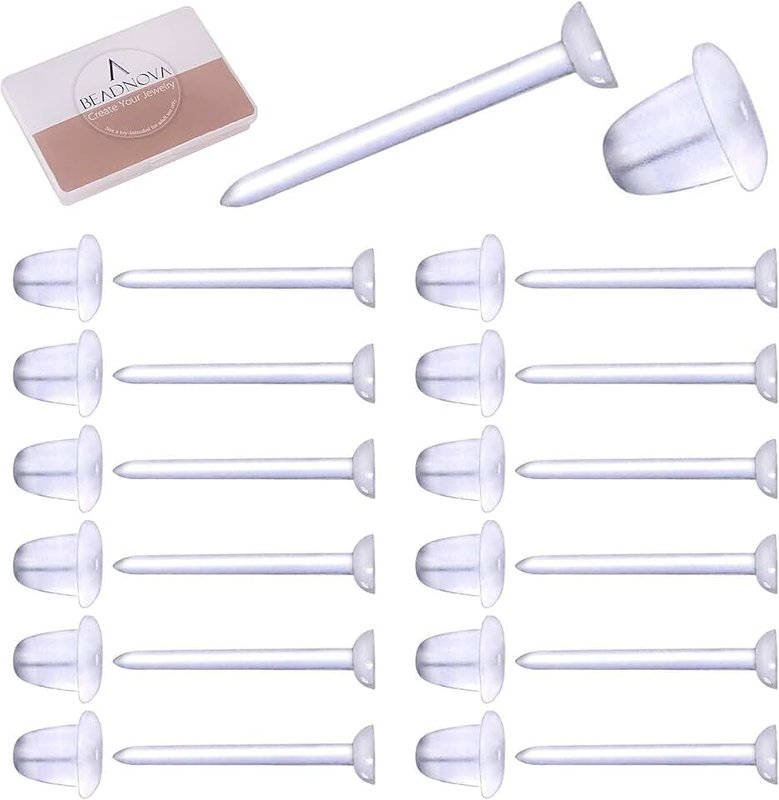
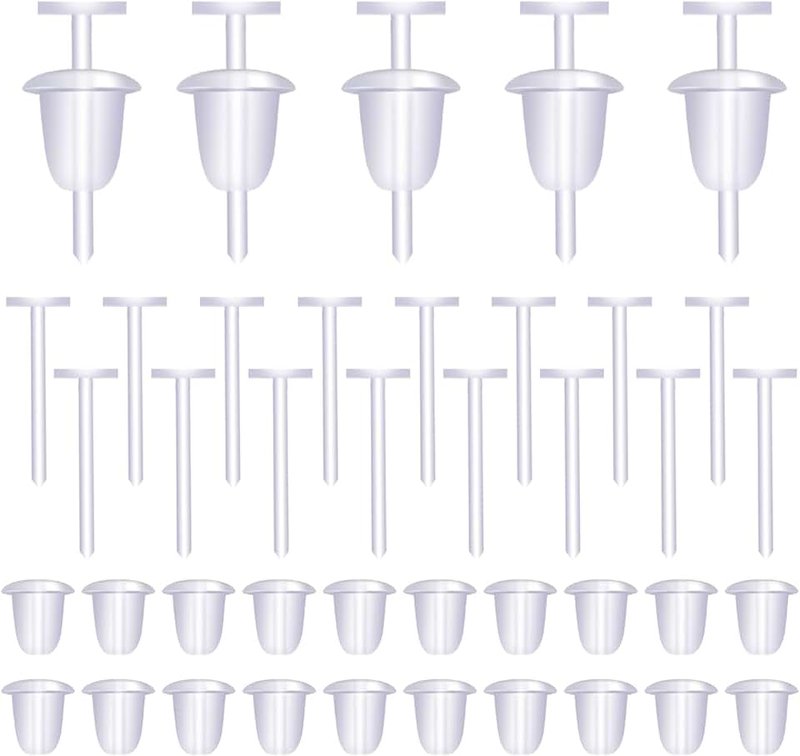
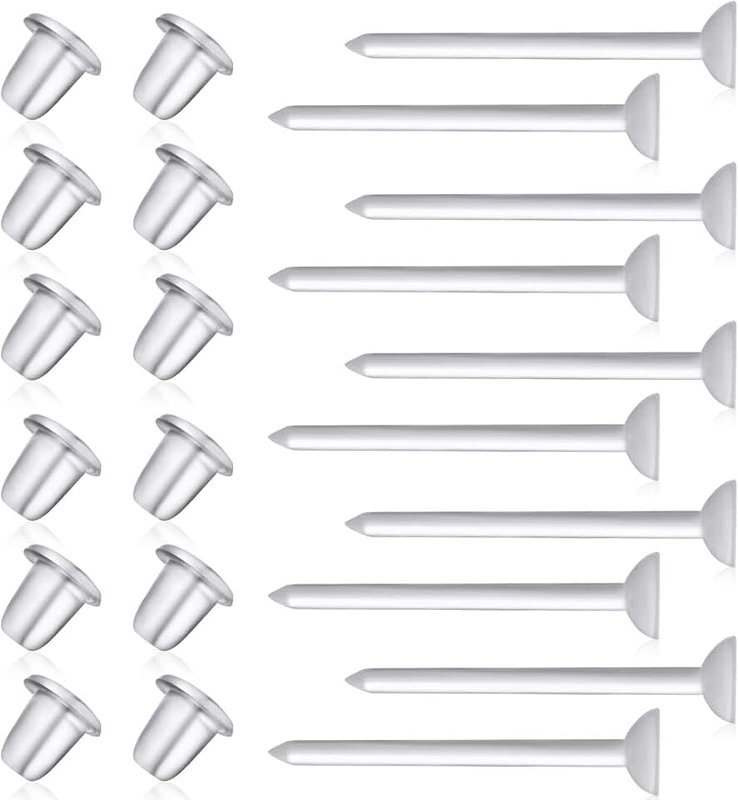
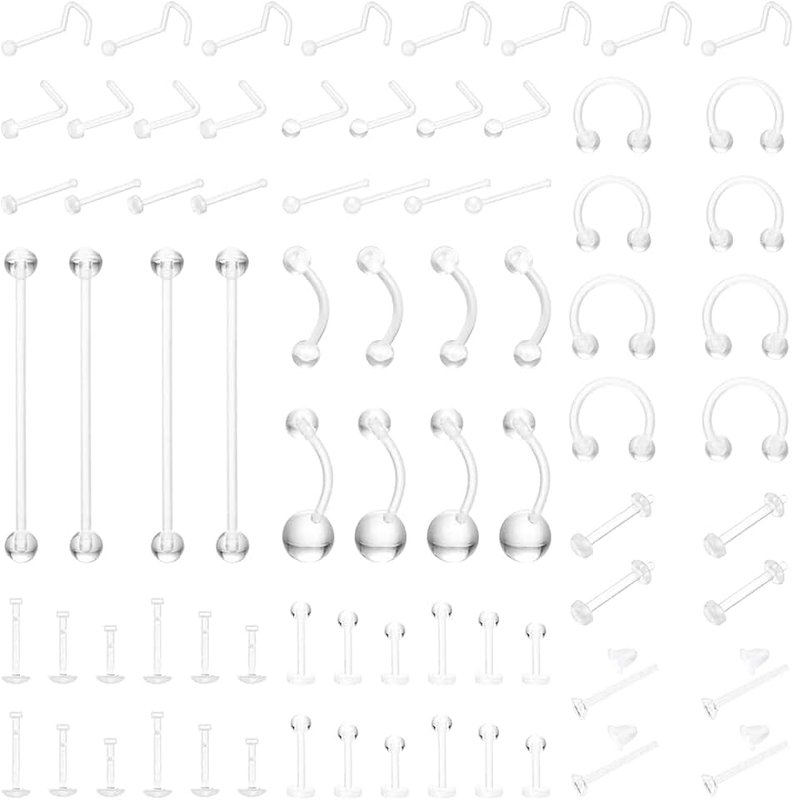
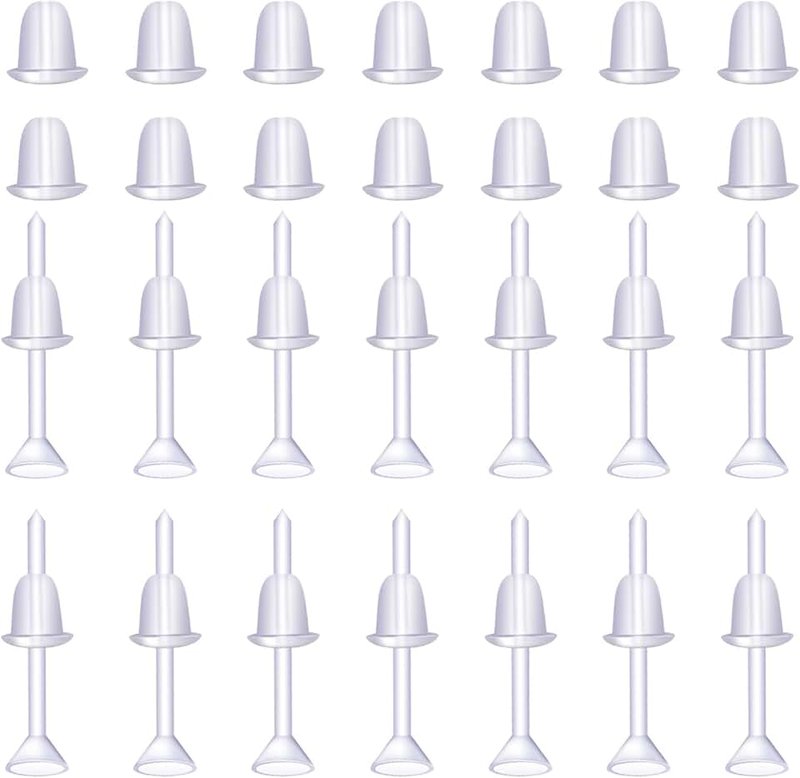
Clear stud earrings with a flat or dome-shaped top are the most discreet. Clear hoop retainers exist for larger gauge piercings. Nose, tragus, and cartilage versions come in clear earrings formats too — match the gauge (thickness) to your piercing to avoid stretching or discomfort. Labret-style clear retainers with a flat back sit flush and are particularly comfortable for cartilage piercings.
Sizing and Gauge
Standard lobe piercings use 20-gauge (0.8 mm) or 18-gauge (1 mm) posts. Cartilage piercings are typically 16-gauge (1.2 mm). Stretched lobes need plugs or tunnels in the specific millimetre size of the stretch. Wearing the wrong gauge risks the earring falling out (too thin) or forcing the hole wider (too thick). When in doubt, visit a piercer for a quick measurement.
When to Use Clear Earrings
During healing: a clear retainer keeps the piercing open while being less visible than metal jewellery. During sports: clear earrings satisfy many competition rules that ban metal jewellery. At work: they maintain piercings through shifts where visible jewellery is not allowed. During medical procedures: MRI scans require non-metallic jewellery, and clear retainers solve this problem neatly.
Choosing the Right Clear Earring for Your Situation
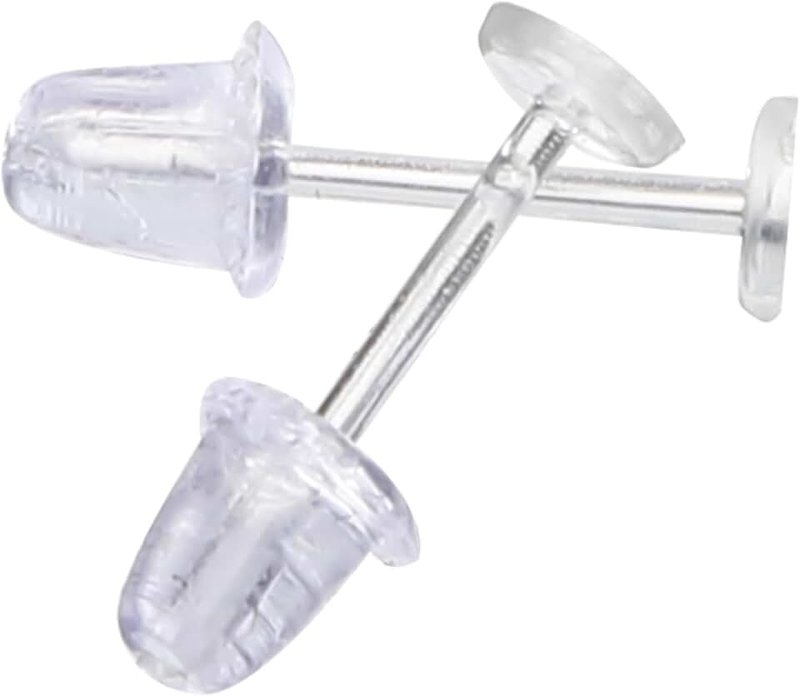
For a healing piercing that needs to stay open during work or sport, bioplast or PTFE retainers are the safest bet — they are body-safe, flexible, and practically invisible. For healed piercings that you simply want to maintain without showing jewellery, glass or silicone retainers give the most comfortable long-term wear. If you need clear earrings specifically for a medical scan, confirm the retainer contains zero metal components — some “clear” earrings still have a steel post inside the plastic body.
Hygiene and Care
Clean clear earrings with warm soapy water or a saline piercing spray. Bioplast and glass can be sterilised with rubbing alcohol. Replace bioplast retainers every few months — they can degrade with repeated cleaning. Glass retainers last indefinitely with proper care. Never force a clear earring into a resistant piercing; if it does not slide in easily, the hole may have partially closed.
Buying in Bulk
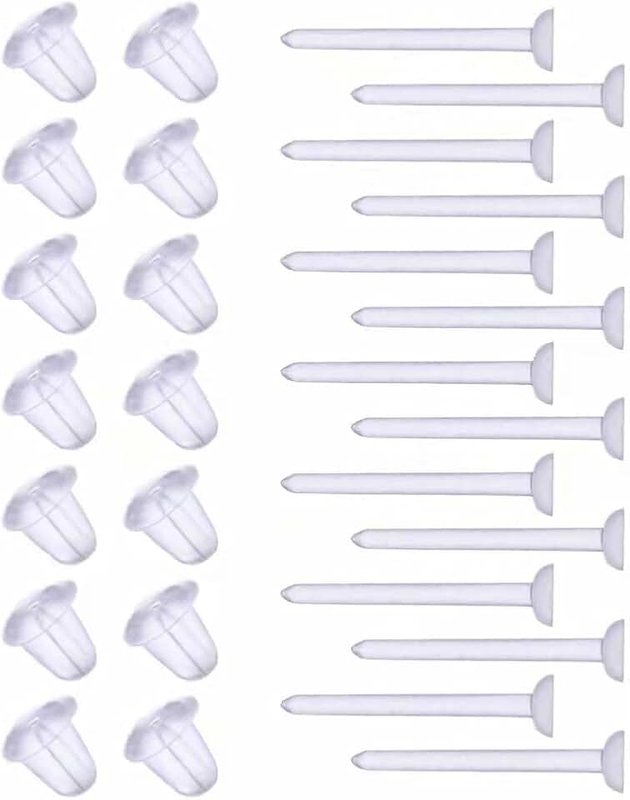
Clear earrings are small, easy to misplace, and — in the case of bioplast — need regular replacing. Buying a multi-pack of five to ten pairs gives you spares without repeat shipping costs. Multi-packs often include a mix of gauges, which is useful if you have piercings in different locations. Keep a spare pair in your gym bag, work locker, or travel kit so you are never caught without one.
Price Guide
Clear earrings in Australia typically cost from $8 to $90 AUD. Bioplast and acrylic retainers sit at the budget end, while glass and PTFE options cost more. Buying a multi-pack gives you spares for losses — clear earrings are small and easy to misplace.
Are clear earrings safe for new piercings?
Bioplast and PTFE clear earrings are safe for new piercings because they are medical-grade and biocompatible. Avoid acrylic in unhealed piercings, as its porous surface can harbour bacteria. Glass retainers are also body-safe for new piercings.
Can you really not see clear earrings?
They are very discreet from a normal conversational distance. Up close, you can spot the slight glint or shape of the retainer. Flat-top clear studs are the least visible option. In practical terms, they satisfy most workplace and sports rules about ‘no jewellery’.
How often should I replace clear earrings?
Bioplast retainers should be replaced every two to three months with regular wear, as they can degrade. Glass retainers last indefinitely if cleaned properly. Acrylic should be replaced frequently — it scratches easily and those scratches collect bacteria.
What gauge are standard clear earrings?
Standard lobe piercings use 20-gauge (0.8 mm) or 18-gauge (1.0 mm). Cartilage piercings are usually 16-gauge (1.2 mm). Always match the gauge to your piercing size to avoid discomfort or the earring falling out.
Can I wear clear earrings during an MRI?
Non-metallic clear earrings made from bioplast, PTFE, glass, or silicone are MRI-safe. Always confirm with the medical facility beforehand, as policies vary. Remove any clear earrings that contain metal components like a steel pin or clasp.