

Baby Earrings
As an Amazon Associate, DreamPigeon earns from qualifying purchases. Prices and availability are accurate as of the date/time indicated and are subject to change.
Choosing Safe Earrings for Babies and Infants
Buying earrings for a baby requires a different approach than shopping for adult jewellery. Safety, comfort, and hypoallergenic materials take priority over style, though plenty of adorable designs exist that tick all the boxes. Baby earrings are available from $31 to $83, and spending more genuinely gets you safer, more comfortable products.
Material safety is non-negotiable for baby earrings. Choose surgical-grade titanium, 14K or 18K solid gold, or medical-grade stainless steel. Avoid sterling silver for babies under 12 months — the copper alloy content can irritate new piercings on delicate baby skin. Absolutely avoid nickel, brass, and any unknown alloy metals. The risk of allergic reaction is significantly higher in infants than adults.
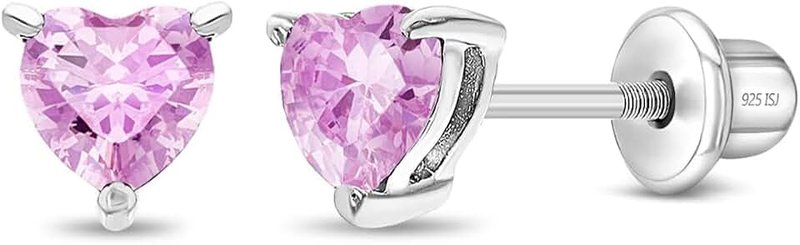
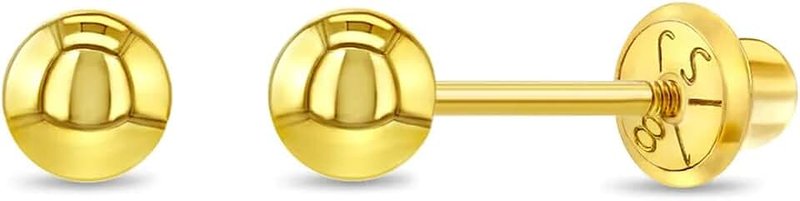
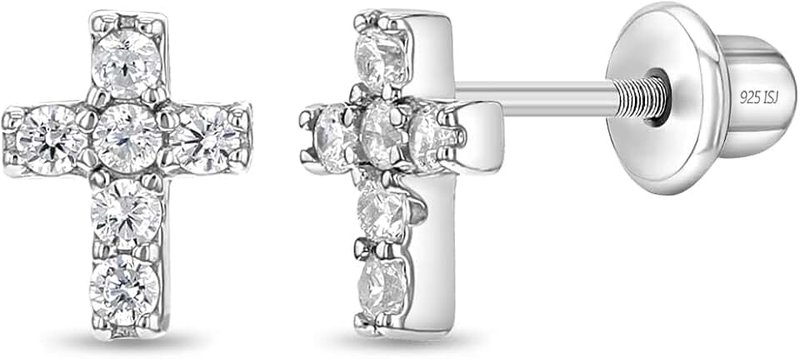
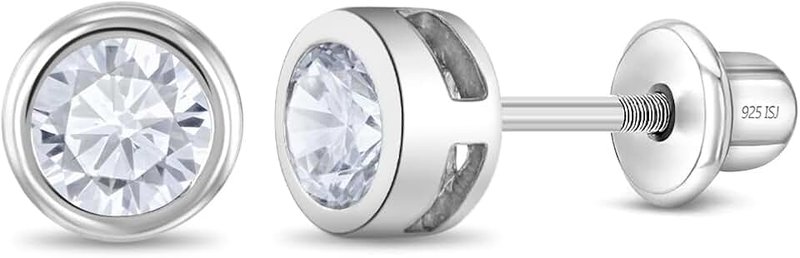
Screw-back closures are essential for baby earrings. Standard butterfly backs are a choking hazard — they can come loose and be swallowed or inhaled. Screw-backs require deliberate turning to remove, making accidental detachment practically impossible. This is the one feature you should never compromise on.
Design and Size Considerations
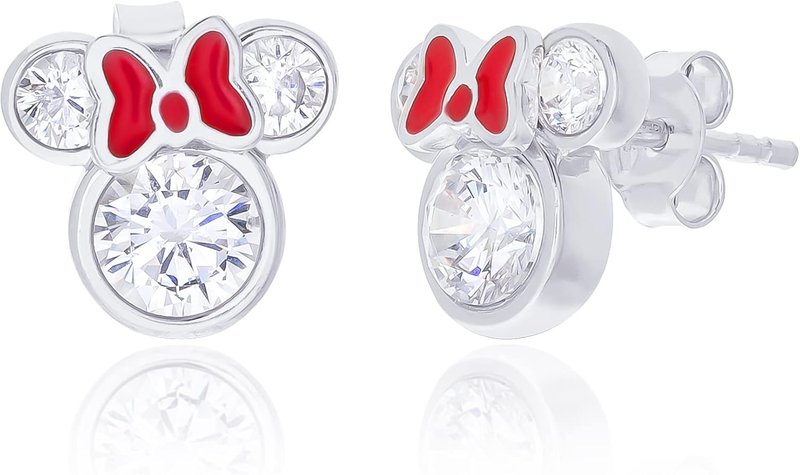
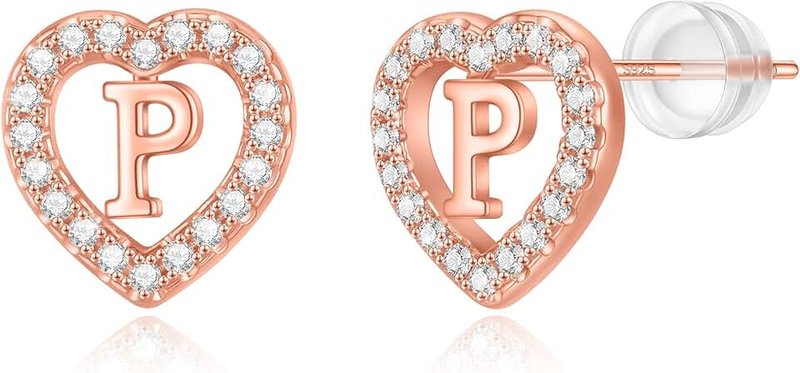
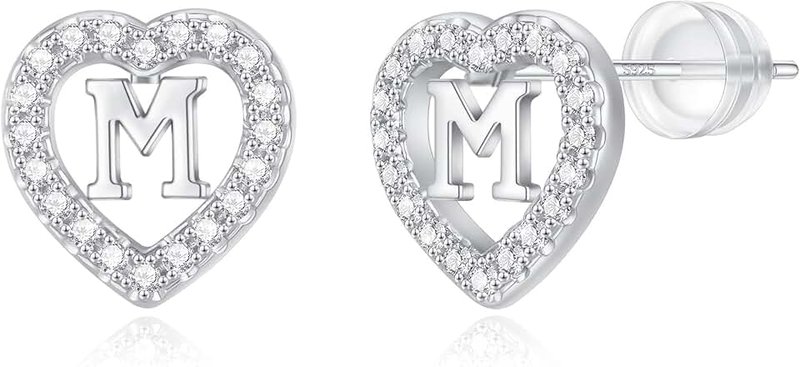
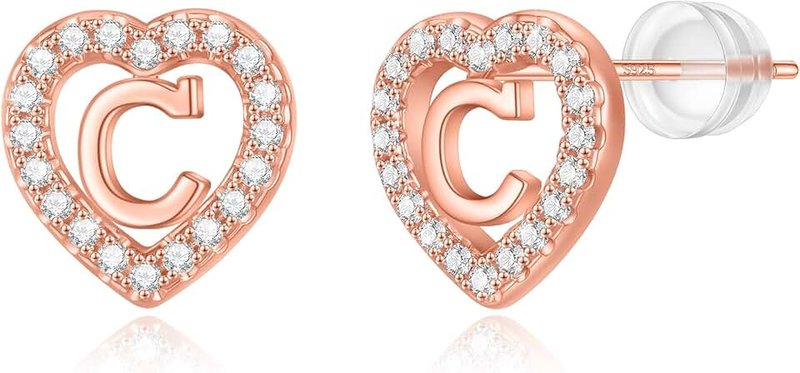
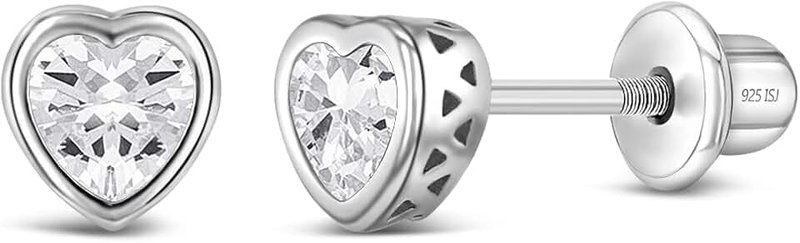
Baby earring studs should be small (3-4mm), flat, and smooth with no protruding edges or prongs. Bezel-set stones (where the stone sits within a smooth metal rim) are safer than prong-set stones, which can scratch delicate skin. Round, flat-back studs are the most comfortable for babies who sleep on their sides.
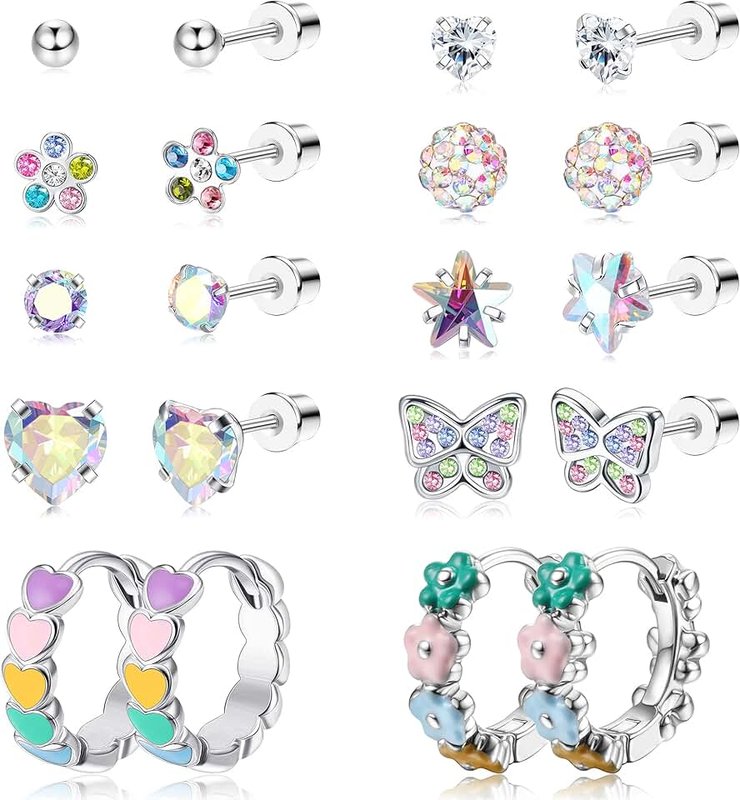
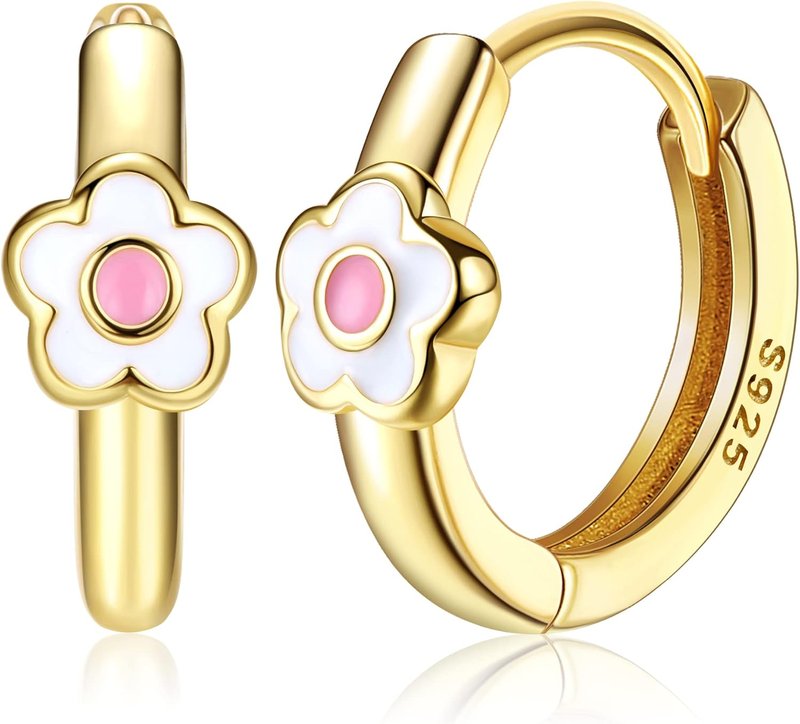
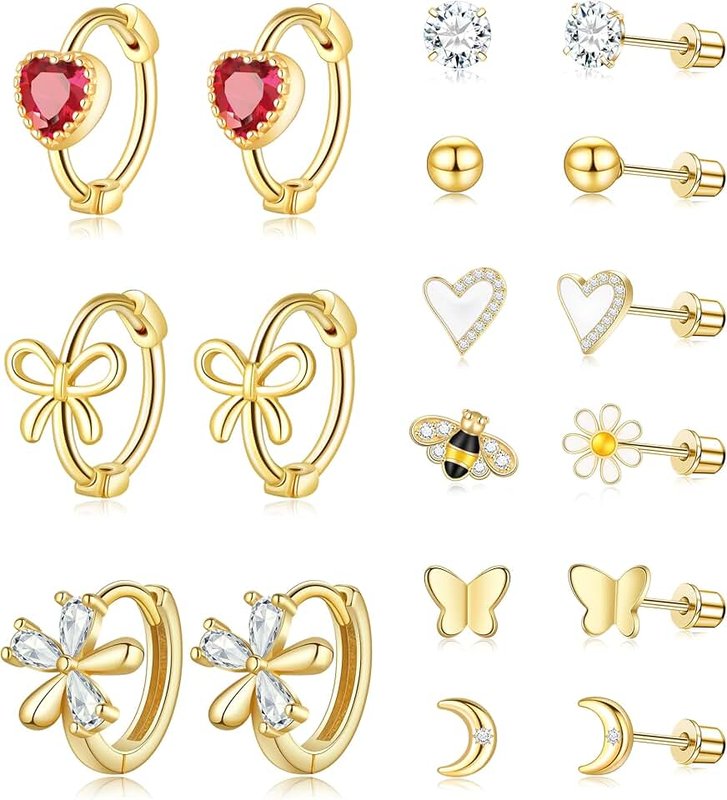
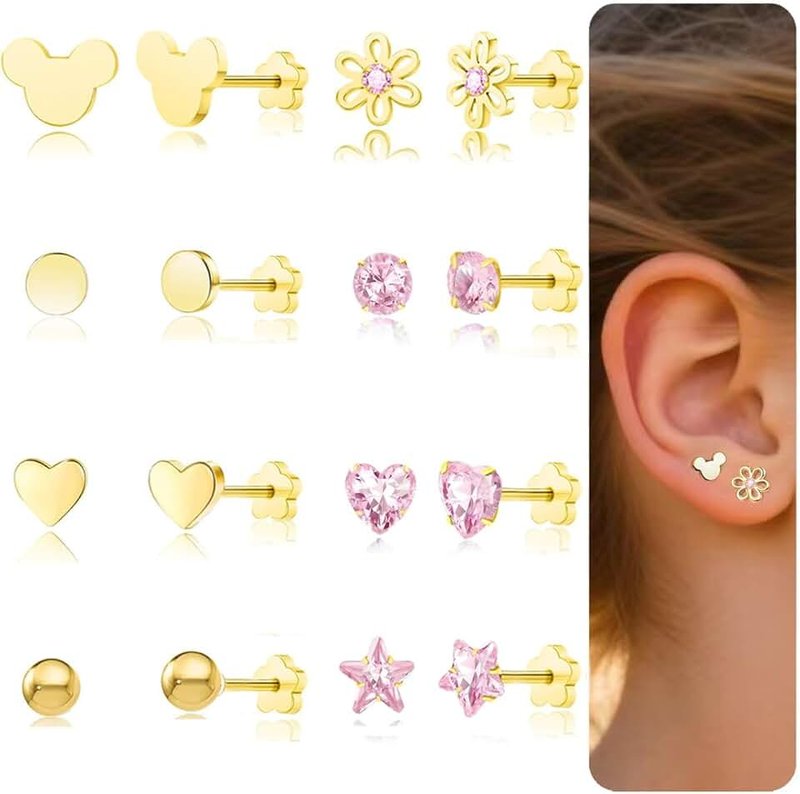
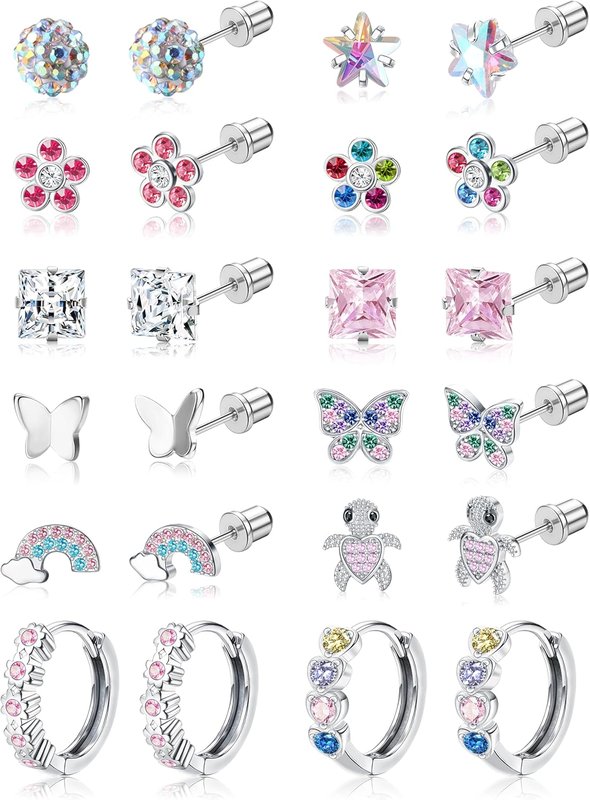
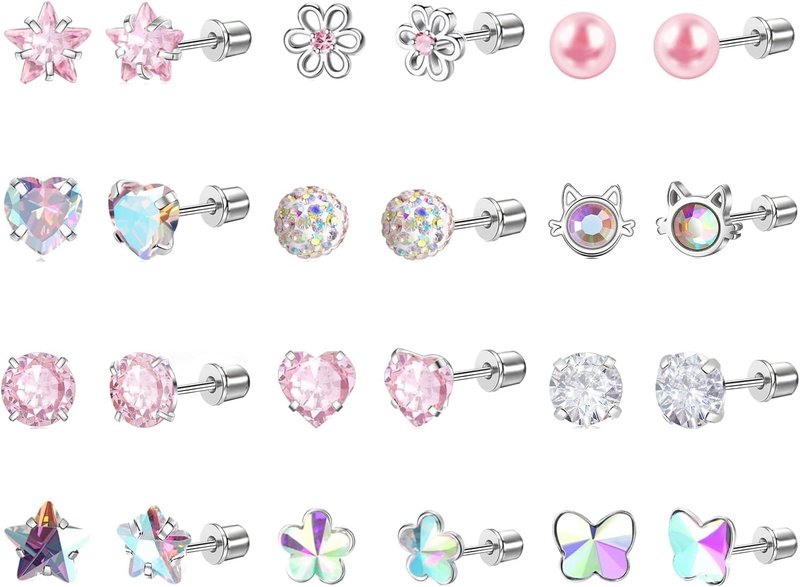
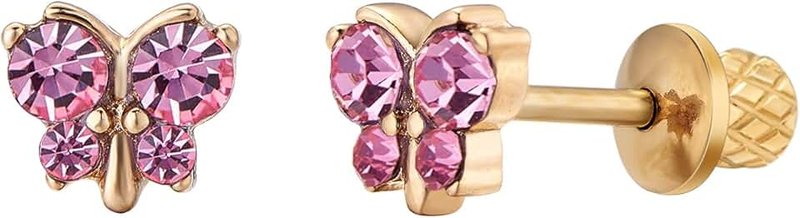
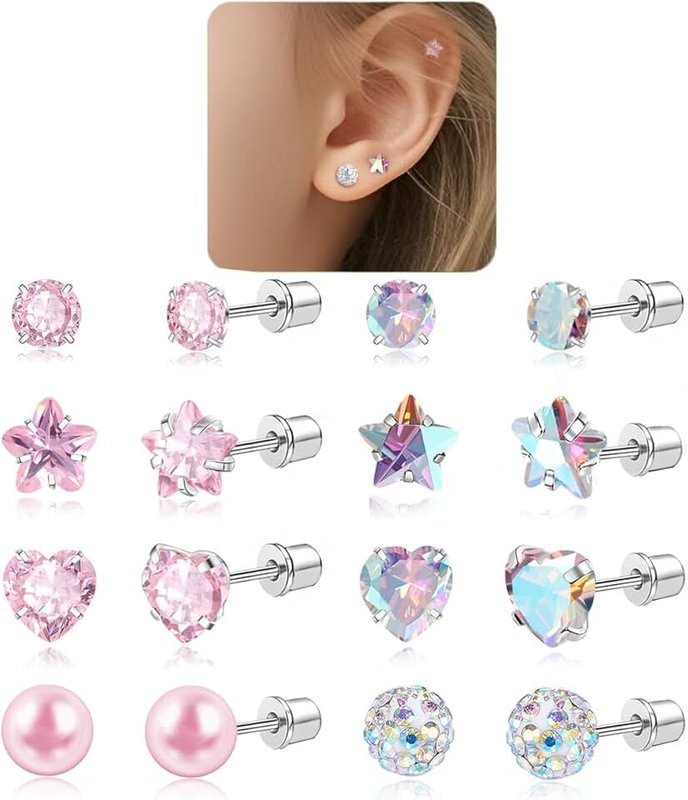
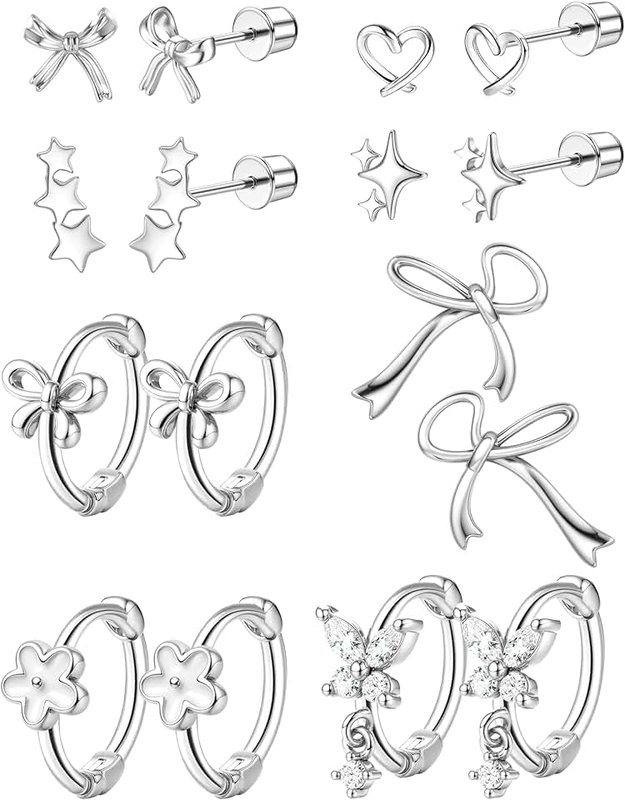
Popular baby earring designs include simple gold balls, tiny CZ studs, flower studs, butterfly motifs, and small pearl studs. Keep it simple — intricate designs with multiple components create more potential failure points and cleaning challenges.
Post length matters for baby earlobes. Baby earring posts should be shorter than adult posts — around 8-9mm versus the standard 11-12mm. A post that’s too long extends beyond the back of the earlobe and can poke the baby’s neck when turning their head.
After-Piercing Care
If you’ve had your baby’s ears pierced, the initial healing period lasts 6-8 weeks minimum. During this time, leave the earrings in and clean around each piercing twice daily with a saline solution (1/4 teaspoon salt dissolved in a cup of warm water). Don’t use rubbing alcohol or hydrogen peroxide — both are too harsh for baby skin.
Watch for signs of infection: increasing redness, swelling, warmth, discharge, or the baby showing distress when the area is touched. Mild redness in the first 48 hours is normal. If symptoms persist or worsen, see your GP promptly — infant ear infections from piercings can escalate quickly.
After the initial healing, clean baby earrings weekly and check the screw-backs for tightness. As the baby grows, their earlobes thicken — you may need to switch to earrings with slightly longer posts around 12-18 months to accommodate the change.
Choosing a Professional Piercer for Infants
Where you get your baby’s ears pierced matters as much as the earrings you choose. Avoid mall piercing kiosks that use piercing guns — these force blunt studs through the tissue and cannot be properly sterilised between clients. Instead, seek a professional body piercer who uses single-use hollow needles. Needle piercings are quicker, more precise, and heal faster than gun piercings. Many paediatric clinics also offer ear piercing with proper medical-grade equipment and sterile technique, which gives parents additional peace of mind.
What age can babies get their ears pierced?
Most paediatricians recommend waiting until at least 6 months, when the baby has had their initial tetanus vaccinations. Some families pierce earlier for cultural reasons. Consult your GP and choose a professional piercer who has experience with infants.
Are screw-back earrings necessary for babies?
Yes. Screw-back closures are essential for babies because standard butterfly backs are a choking hazard. They can come loose during play, napping, or if the baby pulls at the earring. Screw-backs require deliberate effort to remove, keeping the baby safe.
What metal is safest for baby earrings?
14K or 18K solid gold and implant-grade titanium are the safest options. These metals have the lowest allergic reaction rates. Avoid sterling silver, nickel-containing alloys, and plated metals for babies — their skin is more reactive than adult skin.
How do I clean my baby’s earrings?
During healing, clean around each piercing twice daily with saline solution on a cotton pad. After healing, remove the earrings weekly and wash with warm water and mild baby soap. Dry thoroughly before reinserting. Never use alcohol or peroxide.
Can babies sleep in their earrings?
Yes, babies can and should sleep in their earrings during the healing period. Choose flat-back studs with screw closures for maximum comfort. After healing, many parents leave studs in permanently. Flat, smooth designs prevent discomfort during sleep.